Until the middle of the twentieth century, a bare male head in public was almost always a social error. The hat was not an accessory in the modern, optional sense — it was part of the required equipment of appearing in the world, as obligatory as shoes. What kind of hat you wore, how you wore it, and whether you removed it in the right circumstances communicated your class, your occupation, your religion, and your manners in a language everyone could read. The collapse of hat-wearing in the postwar decades was not a minor shift in fashion. It was the dissolution of one of the most legible social codes in the history of Western dress.
What the Head Has Always Meant
Covering the head carries meaning in almost every culture that has left a record. The reasons vary — sun protection, warmth, ritual cleanliness, divine proximity — but the common thread is that the head is special. It is where thought, vision, and speech originate. In many traditions it is the seat of the soul or the spirit, the part of the body most directly addressed in prayer and in ceremony. Covering or uncovering it is therefore not neutral. Priests, kings, scholars, judges, soldiers, and craftsmen all had specific head coverings, and the distinctions between them were legally and socially enforced in ways that may surprise a modern reader.
Sumptuary laws in medieval and early modern Europe regularly specified which social ranks could wear which fabrics on their heads, and the laws were broken constantly, which tells you both how meaningful the distinctions were and how much people wanted to transcend them. A beaver-felt hat — produced from the dense, interlocking underfur of the beaver, which felts more tightly than any other available material — was an expensive luxury in the sixteenth and seventeenth centuries. Its possession put you in one category; a wool cap put you in another. The North American fur trade, which built the early European economies of Canada and the northern United States, was driven substantially by European demand for beaver pelts to make the best quality hat felt. The hat market shaped a continent.
From the atelier
Mid-article pick
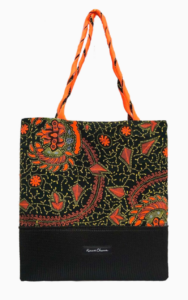
A molten orange tote with a clear focal shape, well suited to the wider in-content slot.
The Victorian Taxonomy
By the nineteenth century, hat taxonomy had become highly refined. The top hat — silk-covered, rigid, tall — was the standard of formal male respectability, its exact height varying with fashion and its silk finish indicating serious expenditure. The bowler (or derby, in the American usage), invented in 1849 for gamekeepers who needed a hat that would not be knocked off by branches on horseback, was adopted by the urban middle class as a more practical alternative and became one of the defining images of Victorian and Edwardian respectability. The cloth cap denoted the working class. The boater — a flat-crowned, stiff straw hat — was summer leisure. The homburg and the fedora navigated the territory between formality and informality in ways that period observers could parse at a glance.
Women’s hat history runs in parallel and is if anything more complicated, with changes in silhouette, brim width, height, and decoration tracking fashion cycles with great precision. The wide-brimmed Edwardian hat, piled with flowers and feathers — the millinery trade consumed so many bird plumes that several species were brought near extinction before early conservation legislation intervened — gave way to the close-fitted cloche of the 1920s, which gave way to the tilted, sculptural hats of the 1930s and 1940s. Each shift meant something about the social moment.
The Disappearance
The conventional explanation for the decline of everyday hat-wearing in the 1950s and 1960s involves cars (low roofs made hats awkward), central heating (heads were now warm indoors), and the general loosening of formal dress codes that followed the Second World War. All of these contributed, but none is fully satisfying. The real shift was probably generational and political: younger people in the postwar period rejected the formality of their parents’ generation, and the hat was among the most visible signs of that formality. Not wearing a hat became a statement before it became a norm.
The story that US President John F. Kennedy killed the hat industry by appearing bare-headed at his inauguration in 1961 is largely a myth — he owned hats and wore them — but it persists because it captures something true about that moment. A bare head on a powerful man no longer meant disrespect or poverty; it meant youth, confidence, a deliberate setting aside of inherited formality. The code broke because the people reading it stopped sharing the assumptions that made it legible.
What Remains
The hat is not gone. It survives in specialist forms — the hard hat, the crash helmet, the surgical cap, the baseball cap, the hijab, the kippah, the clerical collar’s accompanying biretta — each encoding the specific meaning it has always had. And formal occasions still summon hats: weddings, race meetings, certain royal occasions. The vocabulary hasn’t quite died; it has contracted to the contexts where it still carries live meaning. The rest of the time, we go bare-headed, which is itself a statement, even if we no longer know how to read it.