For most of the history of portable timekeeping, the serious timepiece was carried, not worn. The pocket watch — wound, cased in silver or gold, chained to a waistcoat — was the standard instrument of a man who needed to know the time, from the seventeenth century well into the twentieth. The wristwatch existed before the First World War, but it was considered a woman’s accessory, a piece of jewellery more than a tool. The idea of a man strapping a clock to his wrist would have struck a Victorian gentleman as slightly absurd, like wearing a barometer as a lapel pin.
From Bracelet to Instrument
The transformation came with modern warfare. Artillery officers in the late nineteenth and early twentieth centuries found that synchronising movements required checking the time quickly and frequently, often with both hands occupied. The pocket watch, however fine, was a two-handed operation: reach into the pocket, extract the watch, open the cover, read it, close it, replace it. A watch on the wrist could be read with a glance while holding a field telephone or pointing at a map.
The Boer War and then the First World War turned the wristwatch from a military curiosity into a standard-issue instrument. British officers were advised to obtain them. By 1916, they were common enough that manufacturers were producing specific military models — with luminous dials, shrapnel guards over the crystal, and cases robust enough to survive trench conditions. Soldiers returning from the war brought the habit home. The generation that had worn a watch on their wrist through four years of conflict was not about to revert to fumbling in a waistcoat pocket during peacetime.
The Luxury Object
Between the wars, the wristwatch evolved rapidly. The watch industry, concentrated in Switzerland, developed thinner movements, more accurate escapements, and greater resistance to water and shock. By the 1930s and 1940s, the wristwatch had divided into two streams: the workmanlike instrument — a clean dial, a steel case, a leather strap, accurate and durable — and the jewelled luxury object, in gold or platinum, encrusted with diamonds, as much a status display as a timekeeper.
The diving watch emerged after the Second World War, driven by the new popularity of recreational scuba diving. Rolex’s Oyster Perpetual Submariner, introduced in 1953, established a template — 200-metre water resistance, rotating bezel, automatic movement — that has been copied by every manufacturer since. The professional tool watch, designed for specific extreme environments, became the most copied and collected category in the hobby of watch collecting, which grew substantially in the late twentieth century.
From the atelier
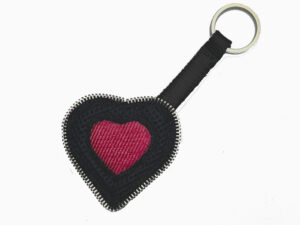
Mid-article pick
A lighter-priced heart shape that still gives the break in the post a clear commercial moment.
The Quartz Crisis and Its Aftermath
In the 1970s, Japanese manufacturers introduced accurate, cheap quartz watches that rendered the Swiss mechanical watch industry’s products functionally obsolete for most purposes. A ten-dollar quartz watch kept better time than a thousand-dollar mechanical one. The Swiss industry contracted dramatically, hundreds of firms went under, and the mechanical watch appeared to be dying.
What saved it was a reframing. The mechanical watch was repositioned not as a timekeeping device but as a craft object, a status symbol, and a connection to the history of horology. You did not buy a mechanical watch because it told perfect time; you bought it because it contained hundreds of tiny components machined to tolerances measured in microns, assembled by hand in a Vallée de Joux workshop, and because it would outlast its owner if properly maintained. The marketing was successful because it was also true. The Swiss high-end mechanical watch industry recovered, contracted to luxury, and is now more profitable than it has ever been while selling fewer units.
Simultaneously Obsolete and Indispensable
The wristwatch in 2025 occupies a peculiar position. The smartphone has made it functionally redundant as a time-checking device — most people know the time from a screen rather than a dial. Yet watch sales in the luxury tier remain strong, and the market for vintage watches has become a minor financial phenomenon. A plain steel Rolex Submariner from the 1960s now sells at auction for multiples of its original price, adjusted for inflation. People who have never needed a watch to survive the trenches are paying serious money for instruments with the same design logic as those trench watches.
The wristwatch has completed the full arc that began with the wristwatch being mocked as frivolous jewellery. It went from jewellery to serious instrument to luxury object to financial asset to, in the case of the smartwatch, a notification device strapped to the wrist. What it has never quite stopped being, in any of these incarnations, is a statement about the kind of person who wears it. The specific statement changes with the object and the era. The relationship between time, the wrist, and social identity, apparently, does not.