The modern zip fastener was not invented at once. It was invented badly in 1851 (a hook-and-eye chain that kept coming undone), improved inadequately in 1893 (a sliding clasp that was still unreliable), and finally made to work properly in 1913 by a Swedish-American engineer named Gideon Sundback, who redesigned the interlocking teeth from scratch. The word ‘zipper’ was coined in 1923 by the B.F. Goodrich Company for a galosh that used the new mechanism. By the 1930s, fashion designers were beginning to use it in clothing. By the 1950s, jeans had it. By the 1970s, punk musicians had weaponised it as an aesthetic. By now, the average person in a wealthy country interacts with zippers dozens of times a day without a moment’s thought.
What if Sundback’s redesign had never happened? What if the interlocking tooth mechanism had remained the province of a handful of patents and never achieved reliability?
The World of Buttons and Hooks
The world without the zip would have been the world that already existed before it: a world of buttons, hooks and eyes, laces, press studs, ties, and toggles. This is not a world of particular inconvenience — humans managed entirely well with these fasteners for thousands of years, and many garments still use them exclusively. But there are specific things the zip made possible that its predecessors could not replicate.
Speed is the most obvious. A full-length boot zipper closes a boot in a second; the equivalent row of buttons takes considerably longer. In a world without zips, the elastic-sided Chelsea boot (invented in 1851, the same year as the first failed zipper attempt, as if in competition) and the pull-on boot would have become dominant, as they were already on their way to becoming. The lace-up boot, already a necessity for more demanding work, would have remained primary for anything requiring a secure fit. We would simply have had more practice with laces.
From the atelier
Mid-article pick
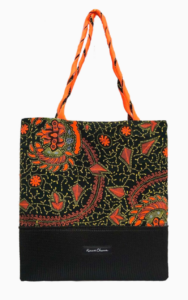
A molten orange tote with a clear focal shape, well suited to the wider in-content slot.
Trousers and the Button Fly
Men’s trousers without the zip would have retained the button fly, which most trousers had until the 1930s. Button flies are not badly designed — many people prefer them for their reliability and their avoidance of the specific failure mode of a zip coming undone or breaking — and their absence from most modern trousers is a matter of manufacturing economics rather than superior function. A zipper-free world would simply be a button-fly world, which was the actual world until living memory.
More interesting is the question of women’s dress fastening. The zip transformed the rear-fastening dress: a long zip up the back is one of the defining silhouettes of mid-twentieth century fashion, enabling a close fit from neck to hip that buttons alone could not achieve without extraordinary complexity. Without the zip, the dressmaker’s art would have developed differently: more complex internal structures to allow close fitting with fewer external fasteners, more reliance on stretch fabrics to remove the fastening problem altogether, more garments that fasten at the side rather than the back. The fit of twentieth century fashion might have been looser or more architecturally structured, but it would have found its solutions.
The Aesthetics of Fastening
The zip is not only functional. It is expressive. The exposed metal zip on a leather jacket is an aesthetic statement — industrial, hard, a deliberate refusal of elegance. The concealed zip in a couture gown is its opposite — the expensive invisibility of a perfectly smooth surface. Neither of these effects is possible with buttons, which are always visible and always decorative to some degree. A world without zips would have a different visual language for the distinction between hard and soft, industrial and refined, in clothing. It might have found other ways to make these distinctions, but they would have looked different.
The luggage zip is perhaps the most consequential absence in the counterfactual. The modern soft-sided suitcase, the rucksack, the holdall, and the briefcase all depend on large zips for their characteristic access and closure. Without them, luggage would have continued in the tradition of the hard-sided fastener — buckles, clasps, locks — or would have relied on drawstrings and flaps. The soft, zippered bag is so efficient that it is genuinely hard to design around its absence at comparable cost. Here, perhaps more than anywhere else in clothing and accessories, the zip changed the object decisively rather than just the aesthetics.
The Mundane Invention
Sundback’s redesigned zipper is not celebrated the way the steam engine or the transistor is celebrated, but it has altered the texture of daily life in ways those larger inventions have not. It is intimate, personal, repeated many times before breakfast. Its absence would not have stopped civilisation, but it would have left a different set of small gestures, slightly different sounds, and different aesthetics in its place. The mundane inventions are the interesting ones. They are the ones that have actually changed what it feels like to get dressed in the morning.